Updating small-data music models across practice sessions
How should a musician's personal AI model be updated as they collect more data over weeks of practice?
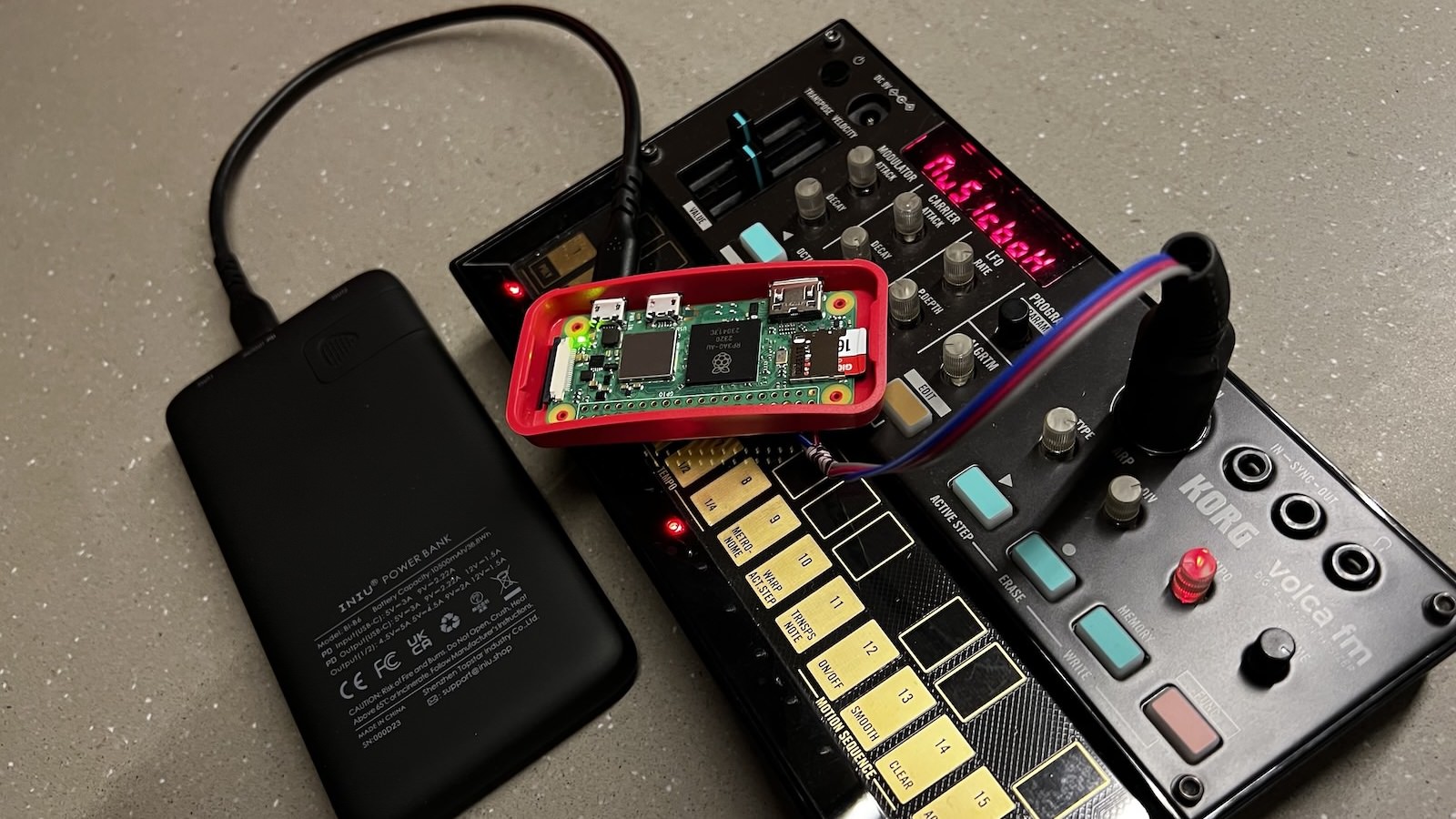
Level: Short project, Honours, Masters
Length: A short project is a six-week summer research scholarship or a one-semester COMP3740 project. Honours and Master projects run over two semesters.
Prerequisites: Python and some machine learning (e.g., COMP3670 or COMP4670). Experience with Keras/TensorFlow is helpful.
IMPSY models are trained on tiny datasets: a few hours of one person’s playing. In our recent experiments, a model trained on about seven hours of controller data from several performances started to overfit after a few dozen epochs. Musicians collect more data every time they play, so what’s the best way to update a model? Retrain from scratch? Fine-tune the old model? How much new data does it take to change how the model behaves?
In this project you’ll treat existing performance logs as a sequence of practice sessions, then compare strategies for updating an MDRNN after each one. A key part of the project is defining how to tell when a model has actually changed its musical behaviour, not just its validation loss (for example, by comparing the timing and values of gestures sampled from each model).
- Short project: a reproducible experiment pipeline using IMPSY’s dataset tools; retraining vs. fine-tuning on one instrument’s data; validation loss plus one behavioural measure.
- Full project: add regularisation strategies and a second dataset (e.g., logs from the related multi-week study project or other lab instruments), and recommend a procedure for updating models between sessions.
Background reading
- Martin, C. P. and Torresen, J. (2019). An Interactive Musical Prediction System with Mixture Density Recurrent Neural Networks. NIME 2019 (the original IMPSY paper).
- Martin, C. P. (2024). Generative AI for Musicians: Small-Data Prototyping to Design Intelligent Musical Instruments. GenAICHI workshop, CHI 2024.
- Fiebrink, R., Cook, P. R. and Trueman, D. (2011). Human Model Evaluation in Interactive Supervised Learning. CHI 2011 (evaluating models by how they behave, not just by accuracy).
Tags: #machine-learning #small-data #music #IMPSY
How to apply
Contact Charles Martin with your CV, your unofficial transcript (if you are an ANU student), and a brief statement (200 words) explaining how you would approach this project. Before applying, read the Join page and our project expectations.