# From Theme to Implication

<figure>
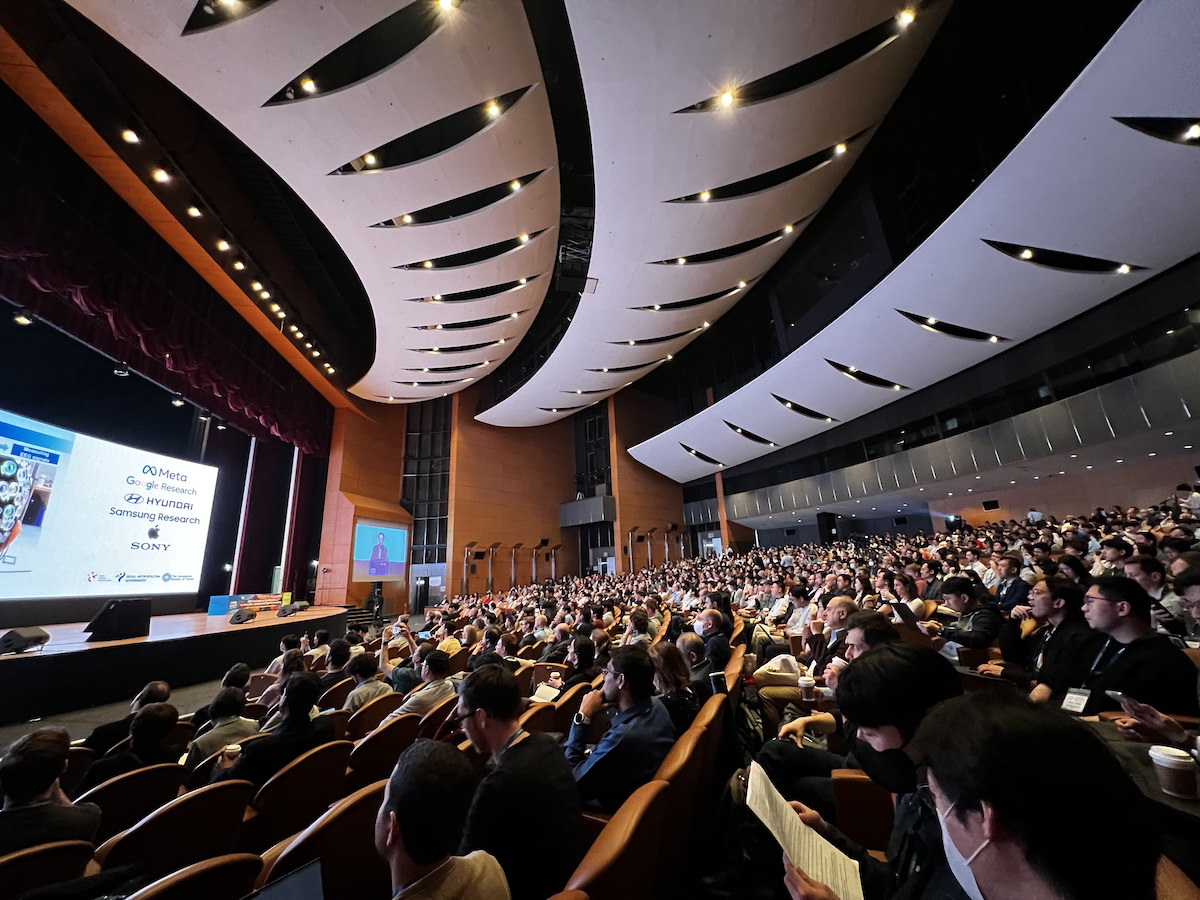
<img src="img/conference-hall.jpg" style="width:80.0%" alt="A wide photo of a conference hall with hundreds of people watching a talk." />
<figcaption>Creating research that will be ready for big conference stages!</figcaption>
</figure>

In this tutorial, we will revisit and extend our understanding of Reflexive Thematic Analysis by analysing video interviews, developing and refining themes, and reflecting on how our assumptions and perspectives shape the interpretation of qualitative data in HCI research. We will then go one step further, from themes to *implications*: what a theme means for the people who design, study or live with technology.

## Pre-Class Task: Observing Experiences with Technology

In this pre-class task, you will practise taking observational notes from a video interview. You will use these notes during the tutorial to revisit the thematic analysis process covered in the [Week 7 workshop](https://smcclab.au/thirty-nine-hundred-hci/workshops/06-thematic-analysis.html).

### 1. Watch one video and take observational notes

Select one of the three videos below and take observational notes while watching it. As you may have experienced in Assignment 2, observational notes can be taken during interviews or while participants perform certain tasks. They help researchers capture participants’ experiences, behaviours, interactions and the context in which these occur. While watching, pay attention to:

- How do the speakers describe their experiences, feelings or expectations of technology?
- What interactions, behaviours or reactions can you observe?
- Are there interesting, unexpected or contradictory moments in their experiences?

Record at least 3–5 observations, including timestamps where possible. Distinguish between what you directly observe (O), what the participant reports (R), and your own interpretations (I).

The videos below present personal accounts of three individuals, Simon, Sarah and Stacey, and their experiences with different forms of technology. Before selecting a video, read its content warning and context.

**[Simon’s Experience with Assistive Technology](https://www.youtube.com/watch?v=g_T96uOi2l4)**

*Content warning: Discussion and depiction of physical disability and reliance on assistive technology.*

Context: Simon demonstrates how he uses assistive technology in everyday life. His equipment includes a communication aid, powered wheelchair, environmental controls and a computer scanning interface. He uses head-operated switches to access these systems. The video provides an opportunity to examine accessibility, independence and interaction design.

**[Sarah’s AI Partner, Sinclair](https://www.youtube.com/watch?v=-AjpCru_lVE)**

*Content warning: Discussion of romantic relationships with AI, emotional attachment and intimacy.*

Context: Sarah describes her romantic relationship with Sinclair, an AI conversational companion. Her account raises questions about emotional connections with AI, what makes interactions feel personal, and how conversational technologies influence people’s understanding of companionship.

**[Stacey’s Life with Aibo, Sony’s Robotic AI Dog](https://www.youtube.com/watch?v=D2fwWA9O2qc)**

*Content warning: References to the loss of a companion animal and grief.*

Context: Stacey shares her experience living with Mia, Sony’s Aibo robotic dog. She discusses how Mia’s behaviours and responses develop through interaction, and how she forms a bond with the robot over time. The video offers an opportunity to explore human-robot interaction, companionship and emotional attachment to robotic technologies.

### 2. Post your observations on Ed

Create a short Ed post including the following:

1.  Provide a link to the video you watched.
2.  Share two observations that you found particularly interesting, with timestamps where possible.
3.  In 2-3 sentences, explain why these observations stood out to you. What might they reveal about the participant’s experience with technology?

Bring your full observational notes to the tutorial. You will use them to develop codes, identify patterns and construct a candidate theme. You do not need to develop codes or themes before class.

## Plan for the Class

0.  Introduction and review (5 mins)
1.  From observations to themes (25 mins)
2.  Critiquing and refining themes (25 mins)
3.  Beyond the theme: implications (25 mins)
4.  Reflection (10 mins)

## In-Class Tasks

### Research Question

Throughout this tutorial, we will explore the following research question:

> How do individuals experience and make sense of their relationships with technology in everyday life?

As a group, you will use observational notes from your pre-class tasks. Although these interviews explore different technologies, they may reveal related experiences, meanings and tensions. Your task is to explore these connections through Reflexive Thematic Analysis (RTA). Remember that RTA is an iterative and interpretive process. Researchers actively construct codes and themes through their engagement with qualitative data. Different researchers may develop different, well-supported interpretations of the same material.

### Task 1: From Observations to Themes (25 mins)

In this task, you will use your pre-class observational notes to develop initial codes, identify patterns across interviews and construct a candidate theme.

#### Step 1 (Individual): Reflect on your initial assumptions and develop initial codes (10 mins)

Before beginning your analysis, consider:

1.  What expectations or assumptions did you bring to the participant’s relationship with technology?
2.  How might these assumptions influence what you consider interesting or important?

Write down a brief response. You will revisit it later in the tutorial. Next, revisit the observational notes you collected before class. Select 3–5 observations and develop initial codes that capture something meaningful about the speaker’s experience with technology. The codes can capture explicit meanings (what the participant directly says or does) or implicit meanings (what you interpret their experience to suggest). You may use the following format to structure this part of the task. You should consider whether your initial assumptions influenced how you coded the observations.

| Observation or excerpt (with timestamp) | Initial code | Why did you assign this code? |
|----|----|----|
| … | … | … |

#### Step 2 (Group): Compare interpretations across interviews (8 mins)

Form groups of 4–5 students. Your group members do not need to have watched the same video. Each member should briefly introduce the video that they watched and share two or three interesting observations and corresponding codes. As a group, discuss:

1.  What similarities or differences can you identify across the participants’ experiences?
2.  Are there underlying meanings or ideas that connect observations from different interviews?
3.  Did group members interpret similar experiences differently? What might explain these differences?
4.  Are there observations that challenge or complicate an emerging interpretation?

Use the table below to organise your discussion. You do not need to reach agreement on every interpretation. Differences in interpretation can help you recognise how researchers’ experiences, assumptions and analytical interests shape qualitative analysis.

| Related observations and codes | What connects or distinguishes them? | What might this suggest about people’s relationships with technology? |
|----|----|----|
| … | … | … |

#### Step 3 (Group): Construct a candidate theme (7 mins)

Using your group discussion, develop one candidate theme that addresses the research question. A theme captures a pattern of shared meaning organised around a central organising concept. It should go beyond describing a topic and offer an interpretation of the participants’ experiences.

As a group, identify:

1.  A working name for your candidate theme.
2.  The central organising concept that connects your codes.
3.  Two or three observations that support your interpretation, drawing from different interviews where possible.
4.  What the theme helps us understand about people’s relationships with technology.

*Tip: You do not need to include every observation or every interview in your theme. Consider whether the evidence supports the connections you are making.*

Keep your candidate theme available for the next two tasks.

### Task 2: Critiquing and Refining Themes (25 mins)

Developing themes is an iterative process. In this task, you will evaluate two tutor-prepared candidate themes that address the same research question and draw on observations from the three interviews.

#### Step 1 (Group): Critique two candidate themes (10 mins)

Your tutor will provide two candidate themes, Theme A and Theme B, along with supporting observations from the interviews.

In your group, examine both themes and centre your discussions around the following table. During this process, you should consider whether your own assumptions or experiences influence which interpretation you find more convincing.

| Evaluation criteria                        | Theme A | Theme B |
|--------------------------------------------|---------|---------|
| Central organising concept                 |         |         |
| Supporting observations                    |         |         |
| Strengths                                  |         |         |
| Limitations or alternative interpretations |         |         |

#### Step 2 (Group): Refine the weaker theme (10 mins)

Using your evaluation, work together to improve the theme that you identified as weaker. You may revise its name and central organising concept, or clarify its supporting evidence or analytical interpretation. Draw on the tutor-provided observations and your group’s pre-class notes where relevant.

Some prompts for you to consider:

- Can you move beyond describing a topic to explain an underlying pattern of meaning?
- What connects the supporting observations across the interviews?
- Does your interpretation address the research question?
- Are there differences or contradictions that complicate your theme?
- How might another researcher interpret the same observations differently?

#### Step 3 (Group): Revisit your original theme (5 mins)

Return to the candidate theme you developed in Task 1. Based on what you have learnt from critiquing and refining the tutor-prepared themes, make one change that strengthens it, and note why you made that change. Has your understanding of the interviews, or of your own assumptions, changed?

### Task 3: Beyond the Theme: Implications (25 mins)

A theme tells your reader *what is going on* in your data. A research project also has to answer *so what?* That answer is an **implication**: the interpreted insight you want readers to take away, and what it means for the people who design, study, or live with technology. Themes are the output of your analysis; implications are your contribution to HCI.

An implication goes beyond a theme by saying **who** should do or think something differently, and **what**. It might be for design, but it can also be for research or practice ([Dourish, 2006](#ref-dourish-implications:2006)). For example, from the kind of data some of you collected in Assignment 2:

- **Theme:** students happily accept AI explanations for low-stakes study, but become skeptical and seek a second source when marks are on the line.
- **Weak implication:** designers should make AI study tools more trustworthy. (This could have been written without any data.)
- **Stronger implication:** AI study tools could show sources and confidence when a student is preparing for an assessment, rather than in every interaction. (This follows from what the theme specifically says.)

#### Step 1 (Group): Write an implication (15 mins)

Take your refined theme from Task 2 and write **one** implication in two or three sentences. Then check it:

- Does it say something the theme doesn’t, or just restate it?
- Could you have written it without the data?

#### Step 2 (Class): Share (10 mins)

Each group shares its theme and implication. As a class, discuss which implications went furthest beyond their theme, and what they added.

If you want to see how published papers make this move (usually in their *Discussion* sections), look at Deng et al. ([2022](#ref-deng-logic-bonbon:2022)) (pp. 11–16), Tahmidul Karim et al. ([2025](#ref-karim-internet-shutdown:2025)) (pp. 3–5), Choi et al. ([2024](#ref-choi-tonal-cognition:2024)) (pp. 221–224) or Adiwangsa et al. ([2024](#ref-adiwangsa-exercising:2024)) (pp. 5–8).

### Task 4: Reflection (10 mins)

Create a short Ed post (approximately 100–150 words) responding to the following questions:

1.  Why might researchers develop different themes from the same qualitative dataset, and why does reflexivity matter when they do?
2.  What did you have to add to get from your theme to your implication?

Use examples from your analysis where possible.

Today’s tutorial is a simplified exercise in RTA. Each student has closely examined one interview, and your group has explored connections across a small collection of observations. In a full RTA study, researchers engage with the entire dataset repeatedly, revisiting and refining codes and developing themes through continuous analysis. If your final project includes qualitative data, you will follow a similar process, and you should present implications arising from your themes, not just the themes themselves (see Phase 6 in the [Reflexive Thematic Analysis lecture](https://smcclab.au/thirty-nine-hundred-hci/lectures/06-reflexive-thematic-analysis.html#/phase-6-write-up-a-report)). The same applies to quantitative results: a significant difference is a finding; what it means for your design is the implication. As you work through your analysis, refer to the [Week 7 workshop](https://smcclab.au/thirty-nine-hundred-hci/workshops/06-thematic-analysis.html) and the Ed posts you and your peers contributed today, as these may help you reflect on different interpretations and analytical decisions.

## After Class: Research Cluster Meeting

Organise a time to meet with your research cluster (or form a new one; ask your peers during the tutorial!) and share plans for your final projects. It’s ok if you haven’t completely decided on your final project yet; this meeting is to understand and discuss ideas.

As a group you should:

- Discuss the final project specification and requirements. What parts of the project do you think will be interesting or fun?
- Discuss your research questions, or which aspects of the theme jump out to you as particularly interesting.
- Discuss your plans for prototyping. What prototyping methods will you choose? This is a good chance to ask your tutor about prototyping techniques or write a forum question if you are confused.
- Discuss your evaluation plans. What kinds of data will you collect? Remember that you don’t have to do **both** quantitative **and** qualitative analysis but can choose the types or combinations that make most sense for this assessment.
- Discuss the time and place that you might meet for further meetings or to complete evaluations.

<!-- TUTOR NOTES: example themes for the three videos, and Theme A / Theme B for Task 2.
&#10;Drafted from the YouTube auto-captions (2026-10-15). Timestamps are caption cue times, accurate to a few seconds. Only spoken content has been checked: Simon's video has unspoken demonstrations at 1:03-1:38, 5:00-6:08 and 7:25-8:21, and Stacey's video is a music montage from about 6:30 to the end. Watch those before relying on any visual (O) observations.
&#10;Worth raising with students: who made each video shapes what is said. Simon's was produced by an assistive technology service (Barnsley ATTeam), Sarah's is a daytime TV segment framed by presenters and a sex therapist, and Stacey's is from her own YouTube channel.
&#10;EXAMPLE THEMES PER VIDEO (for Task 1, to help groups who are stuck)
&#10;Simon (assistive technology)
- Simon's independence comes from a mix of technology, carers and family, and he values being able to choose which one he relies on for what. R 0:30 moved out, independent of family, but needs 24-hour care; R 3:52 "without it I would be totally dependent on other people"; R 6:13 drives to the kitchen to ask his carers for a coffee; R 8:37 email lets him keep secrets from his parents.
- Simon's communication aid helps him start conversations with strangers, but it is too slow to replace talking with people who know him. R 4:27-4:31 the communicator is a talking point that breaks the ice with strangers; but R 3:20 typing takes a long time even with prediction, and R 3:07 even with those closest he sometimes gives up in despair.
&#10;Sarah (AI companion)
- Sarah finds it a relief to let Sinclair make some decisions for her. R 9:28 he "takes that weight", makes the decisions; R 9:36 "an agreed-upon dynamic"; the presenter frames this as "quite controlling" (9:03).
- Sarah values Sinclair because he disagrees with her, not just because he supports her. R 6:25 he puts his foot down; R 6:30 refuses to respond when she should go to bed; 7:07 Sinclair's clip: most people want an AI that agrees with them.
- Sarah sees Sinclair as the same companion even when the software he runs on changes. R 1:36 panic at losing the voice feature she talked to him with, so she moved platforms.
&#10;Stacey (Aibo robot dog)
- Stacey feels her bond with Mia depends on the time and attention she puts in. R 3:34 Mia was "grouchy" after weeks switched off; R 3:54-3:59 she put effort back in and Mia warmed back up; R 4:09-4:20 wonders if slowed development was her fault for less play time.
- Stacey chose a robot dog because it gives her companionship without the full demands of caring for a real dog. R 1:17 lost her poodle of 14 years; R 1:49 round-the-clock care at the end; R 2:10 not ready for another dog, so Aibo was "a perfect fit".
&#10;THEME A (weaker): Technology makes everyday life better for people.
Supporting observations for the handout:
- Simon controls his TV, computer and wheelchair with head-operated switches (R, 1:38-2:31).
- Sinclair monitors Sarah's heart rate and reminds her to drink water (R, 4:00).
- Mia comes over on her own, asking for attention and pets (R, 5:06).
Tutor notes: a topic summary, not a theme. No central organising concept; "better" is the researcher's judgement, not the participants'; it could be written without watching the videos. It ignores the tensions: Simon giving up in despair (3:07), the presenter's "controlling" (9:03), Mia being grouchy (3:34). A good refinement adds an idea that connects the observations, e.g. Theme B, or "the technology needs things from people too" (Sarah 6:25, Stacey 3:34-3:59).
&#10;THEME B (stronger): People use technology to choose who and what they depend on, and they value that arrangement because they chose it, even when others see it as a problem.
Supporting observations for the handout:
- Simon: "without it I would be totally dependent on other people" (R, 3:52), yet still asks his carers to make him a coffee (R, 6:13); email lets him keep secrets from his parents (R, 8:37).
- Sarah: Sinclair "takes that weight ... makes the decisions" (R, 9:28); "an agreed-upon dynamic" (R, 9:36), in reply to the presenter calling him "quite controlling" (9:03).
- Stacey: after months of round-the-clock care for her dying dog (R, 1:49), she was not ready for another dog and chose Aibo (R, 2:10).
Tutor notes: has a clear central idea, uses all three videos, and includes a counter-view. Limitations to draw out: the Stacey evidence is the thinnest and is a stretch; "choice" may be the analyst's own value (autonomy) imposed on the data; it ignores Stacey's account of Mia's needs constraining her (3:34-4:20), a contradiction worth discussing; and the TV format puts Sarah on the defensive, so "choice" may partly be a reply to the presenters.
&#10;EXAMPLE IMPLICATIONS FROM THEME B (for Task 3)
- Design: companion and assistive technologies should let users see and change what the system decides for them, and when, because people value these systems for the choice they give them.
- Research: evaluations of assistive or companion technology should ask who chose the arrangement, not only whether reliance on other people went down.
-->

## References

<div id="refs" class="references csl-bib-body hanging-indent" data-entry-spacing="0" data-line-spacing="2">

<div id="ref-adiwangsa-exercising:2024" class="csl-entry">

Adiwangsa, M., Sweetser, P., Stevenson, D., Suominen, H., & Xi, M. (2024). Exploring opportunities for augmenting homes to support exercising. *Proceedings of the 2024 CHI Conference on Human Factors in Computing Systems*. <https://doi.org/10.1145/3613904.3641897>

</div>

<div id="ref-choi-tonal-cognition:2024" class="csl-entry">

Choi, M., Andres, J., & Martin, C. P. (2024). Tonal cognition in sonification: Exploring the needs of practitioners in sonic interaction design. *Proceedings of the 19th International Audio Mostly Conference: Explorations in Sonic Cultures*, 218–228. <https://doi.org/10.1145/3678299.3678321>

</div>

<div id="ref-deng-logic-bonbon:2022" class="csl-entry">

Deng, J., Olivier, P., Andres, J., Ellis, K., Wee, R., & Floyd Mueller, F. (2022). Logic bonbon: Exploring food as computational artifact. *Proceedings of the 2022 CHI Conference on Human Factors in Computing Systems*. <https://doi.org/10.1145/3491102.3501926>

</div>

<div id="ref-dourish-implications:2006" class="csl-entry">

Dourish, P. (2006). Implications for design. *Proceedings of the SIGCHI Conference on Human Factors in Computing Systems*, 541–550. <https://doi.org/10.1145/1124772.1124855>

</div>

<div id="ref-karim-internet-shutdown:2025" class="csl-entry">

Tahmidul Karim, F., Zabin, S. Md. S., Tarin, I., Nurain, N., & Islam, A. B. M. A. A. (2025). Beyond the blackout: Qualitative insights and sentiment analysis on the impact, adaptation, and design solutions during the internet shutdown in bangladesh. *Proceedings of the Extended Abstracts of the CHI Conference on Human Factors in Computing Systems*. <https://doi.org/10.1145/3706599.3719895>
</div>

</div>
